
The global pharmaceutical industry is rapidly shifting toward advanced drug delivery systems that improve patient comfort, compliance, and therapeutic efficiency. Among these innovations, the Transdermal Therapeutic System (TTS) has emerged as a reliable and effective solution for controlled drug release.
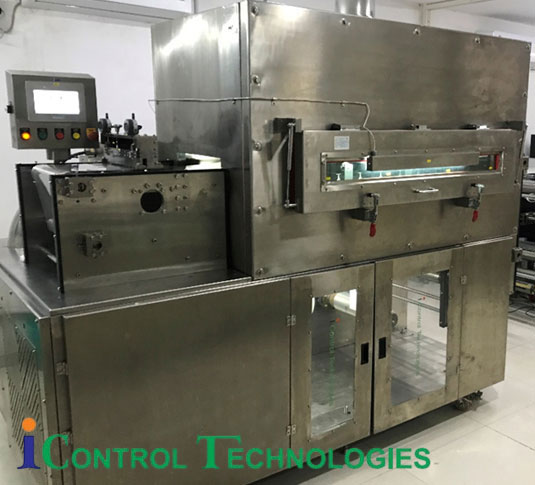
To manufacture these highly specialized patches, precision-engineered equipment is essential. iControl Technologies offers state-of-the-art Transdermal Therapeutic System Machines designed to deliver consistent quality, operational efficiency, and full regulatory compliance.
Understanding Transdermal Therapeutic Systems (TTS)
A Transdermal Therapeutic System is a medicated patch that delivers drugs through the skin into systemic circulation at a controlled rate. Unlike oral medications, TTS bypasses the digestive system, reducing gastrointestinal side effects and first-pass metabolism in the liver.
Key Advantages of TTS:
- Non-invasive drug delivery
- Steady and controlled release
- Improved patient adherence
- Reduced dosing frequency
- Minimized side effects
These benefits have significantly increased the demand for reliable TTS manufacturing systems worldwide.
Complete Manufacturing Process of Transdermal Patches
Manufacturing transdermal patches requires multiple precision-controlled stages. iControl Technologies designs integrated production lines that ensure seamless processing from raw material to finished product.
1. Drug Mixing & Preparation
Active pharmaceutical ingredients (APIs) are blended with adhesives, polymers, and excipients under controlled conditions to achieve a uniform formulation.
2. Coating Process
The formulation is applied evenly onto a release liner or backing film using precision coating systems. Uniform coating thickness is critical for accurate drug dosage.
3. Drying Stage
The coated film passes through a temperature-controlled drying oven to remove solvents while preserving drug stability.
4. Laminating
A protective backing layer is laminated onto the dried film to create a durable and effective patch structure.
5. Slitting & Die Cutting
The laminated roll is slit and die-cut into precise patch dimensions with minimal material wastage.
6. Pouch Packaging
Each patch is sealed in protective pouches to maintain stability and extend shelf life.
iControl Technologies ensures that each stage is optimized for maximum efficiency and regulatory compliance.
Advanced Features of iControl Technologies TTS Machines
High-Precision Coating Systems
- Knife-over-roll and slot-die coating options
- Adjustable coating thickness
- Uniform API distribution
Multi-Zone Drying Tunnel
- Controlled temperature gradients
- Solvent recovery options
- Energy-efficient design
PLC & SCADA Automation
- Real-time monitoring
- Data logging and batch tracking
- Alarm and fault detection systems
GMP-Compliant Design
- Stainless steel construction
- Easy-to-clean surfaces
- Cleanroom compatibility
Modular & Scalable Design
- Suitable for pilot-scale and commercial production
- Customizable machine configurations
Benefits of Choosing iControl Technologies
1. Consistent Product Quality
Advanced process control ensures uniform drug loading and consistent therapeutic performance.
2. Reduced Material Waste
Optimized coating and cutting systems minimize raw material loss.
3. High Production Speed
Automation increases output while maintaining strict quality standards.
4. Regulatory Readiness
Machines are built to meet global pharmaceutical manufacturing standards, including GMP compliance.
5. Long-Term Reliability
Robust engineering ensures durability and minimal maintenance requirements.
Applications Across Pharmaceutical Segments
Transdermal patch technology is expanding rapidly in several therapeutic areas:
Pain Management
Delivery of analgesics for chronic and acute pain relief.
Hormone Replacement Therapy (HRT)
Estrogen and testosterone patches for controlled hormone release.
Smoking Cessation
Nicotine patches to support tobacco withdrawal programs.
Cardiovascular Treatments
Patches for hypertension and angina management.
Neurological Disorders
Treatment for Parkinson’s disease and Alzheimer’s-related symptoms.
Motion Sickness & Nausea Control
Scopolamine-based transdermal systems.
Quality Control & Compliance Standards
iControl Technologies emphasizes strict quality control procedures, including:
- Uniform thickness measurement
- Adhesion testing
- Drug content uniformity testing
- Stability studies support
- Environmental monitoring systems
The machines are designed to operate within ISO-classified cleanroom environments and adhere to global pharmaceutical manufacturing regulations.
Industry Trends Driving TTS Growth
The demand for transdermal systems is increasing due to:
- Aging population worldwide
- Growing chronic disease prevalence
- Preference for non-invasive therapies
- Increased R&D investment in novel drug delivery systems
Pharmaceutical companies are investing heavily in automated production lines to meet this growing demand efficiently.
Customization & Technical Support
iControl Technologies offers:
- Customized machine layouts
- Installation and commissioning support
- Operator training programs
- Preventive maintenance services
- After-sales technical assistance
This end-to-end support ensures seamless integration into existing pharmaceutical production facilities.
Why iControl Technologies Stands Out
With a strong focus on innovation and engineering excellence, iControl Technologies delivers solutions that combine:
- Advanced automation
- Precision manufacturing
- Compliance-driven design
- Energy-efficient systems
- Competitive pricing
Their Transdermal Therapeutic System Machines are trusted by pharmaceutical manufacturers seeking reliability, scalability, and global compliance.
Conclusion
The Transdermal Therapeutic System Machine plays a critical role in modern pharmaceutical manufacturing. As demand for transdermal patches continues to grow, investing in advanced machinery becomes essential for maintaining competitive advantage.
iControl Technologies provides cutting-edge TTS production systems that ensure high-quality output, operational efficiency, and full regulatory compliance. For pharmaceutical companies looking to expand their drug delivery capabilities, these machines offer a powerful and future-ready solution.