

Transdermal drug delivery systems have become an essential part of modern pharmaceutical therapy, offering controlled release, improved patient compliance, and non-invasive administration. At the core of this innovation lies the Transdermal Patch Machine—a specialized manufacturing solution designed to ensure precision, consistency, and regulatory compliance.
At iControl Technologies, we develop advanced automation-driven Transdermal Patch Machines that support efficient, scalable, and GMP-compliant pharmaceutical manufacturing. This article explores the technology, manufacturing process, and key applications of transdermal patch machines.
Understanding Transdermal Patch Machines
A Transdermal Patch Machine is an automated or semi-automated system used to manufacture medicated patches that deliver active pharmaceutical ingredients (APIs) through the skin into systemic circulation. These machines are engineered to control coating thickness, drug uniformity, drying parameters, and cutting accuracy.
Modern machines from iControl Technologies integrate advanced control systems to maintain repeatability, minimize wastage, and support high-quality output across production batches.
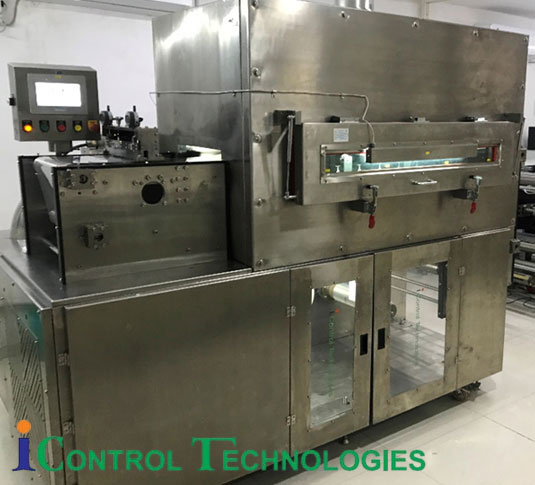
Technology Behind Transdermal Patch Machines
Advanced transdermal patch machines rely on precision engineering and intelligent automation.
1. Coating & Casting Technology
- Uniform coating of drug-polymer matrix on backing layers
- Adjustable coating thickness for different formulations
- High-accuracy metering systems to ensure dose consistency
2. Controlled Drying Systems
- Multi-zone drying tunnels
- Precise temperature and airflow control
- Protection of heat-sensitive APIs
3. Automation & Control Systems
- PLC-based control architecture
- HMI interfaces for real-time monitoring
- Data logging for GMP and regulatory compliance
4. Precision Cutting & Finishing
- Accurate cutting and sizing of patches
- Clean-edge finishing for improved product quality
- Optional inline inspection systems
At iControl Technologies, our machines are designed with modular technology, allowing easy upgrades and customization based on production needs.
Manufacturing Process of Transdermal Patches
The production process using a Transdermal Patch Machine follows a structured and controlled workflow:
- Formulation Preparation
Mixing of APIs, polymers, and excipients under controlled conditions - Coating & Casting
Application of the formulation onto the backing membrane with precise thickness control - Drying & Curing
Removal of solvents through controlled drying zones - Lamination
Application of release liners to protect the medicated layer - Cutting & Slitting
Conversion of coated films into individual patches - Inspection & Packaging (Optional)
Quality checks and integration with downstream packaging systems
This streamlined process ensures consistent product quality and efficient throughput.
Applications of Transdermal Patch Machines
Transdermal Patch Machines are widely used across pharmaceutical and healthcare segments:
Pharmaceutical Applications
- Pain management therapies
- Hormone replacement therapy
- Cardiovascular and neurological treatments
- Smoking cessation patches
Healthcare & Wellness
- Nutraceutical patches
- Vitamin and mineral delivery systems
- Cosmetic and dermatological applications
R&D and Pilot Manufacturing
- Formulation development
- Clinical trial batch production
- Process optimization studies
Machines from iControl Technologies are adaptable across all these applications, supporting both small-scale innovation and large-scale commercialization.
Why Choose iControl Technologies?
At iControl Technologies, we bring together automation expertise, pharmaceutical process knowledge, and precision engineering to deliver world-class Transdermal Patch Machines.
Our Key Strengths:
- GMP-compliant, validation-ready designs
- Customizable machine configurations
- Advanced PLC and HMI systems
- Reduced wastage and higher operational efficiency
- Complete lifecycle support—from design to commissioning
Conclusion
The Transdermal Patch Machine plays a critical role in enabling safe, effective, and scalable transdermal drug delivery. By leveraging advanced technology and controlled manufacturing processes, pharmaceutical companies can ensure product consistency and regulatory compliance.