

Explore how smart manufacturing and industrial automation are transforming modern industries by improving productivity, enhancing product quality, and reducing operational costs. Learn how advanced technologies, data-driven processes, and innovative engineering solutions enable businesses to streamline operations, minimize errors, and increase efficiency. Discover the benefits, challenges, and future opportunities of adopting automation to stay competitive in today’s rapidly evolving industrial landscape.
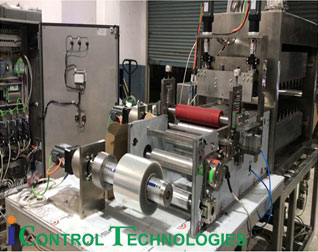
Industrial Automation System with Precision Control Equipment
A sophisticated industrial automation setup showcases precision machinery and control systems used in modern manufacturing processes. Featuring advanced components, wiring, and rollers, the system highlights efficient production, real-time monitoring, and engineering excellence. It reflects how automation technologies streamline operations, enhance accuracy, and improve productivity in industrial environments.
Introduction
The manufacturing industry is undergoing a profound transformation driven by rapid technological advancements and increasing global competition. Traditional production methods are no longer sufficient to meet the growing demands for speed, precision, and cost efficiency. This is where smart manufacturing and industrial automation come into play. These innovations are reshaping how industries operate, enabling businesses to achieve higher productivity, improved product quality, and greater operational efficiency.
Smart manufacturing integrates advanced technologies such as artificial intelligence, the Internet of Things (IoT), robotics, and data analytics into production systems. Industrial automation, on the other hand, focuses on using control systems, machinery, and software to perform tasks with minimal human intervention. Together, they create a highly connected, intelligent, and adaptive manufacturing environment.
What is Smart Manufacturing?
Smart manufacturing refers to the use of digital technologies to create a more flexible, efficient, and responsive production system. It involves connecting machines, systems, and people to enable real-time data exchange and decision-making.
Key components of smart manufacturing include:
- IoT-enabled devices: Machines equipped with sensors to collect and transmit data
- Data analytics: Tools that process large volumes of data to generate actionable insights
- Cloud computing: Enables remote monitoring and data storage
- Artificial intelligence: Enhances decision-making and predictive capabilities
- Cyber-physical systems: Integration of physical processes with digital technologies
By leveraging these technologies, manufacturers can monitor operations in real time, predict maintenance needs, and optimize production processes.
Understanding Industrial Automation
Industrial automation involves the use of control systems such as computers, robots, and information technologies to handle manufacturing processes. It reduces the need for manual labor and enhances precision and consistency.
Types of industrial automation include:
- Fixed Automation: Designed for high-volume production with minimal variation
- Programmable Automation: Allows changes in production sequences
- Flexible Automation: Adapts quickly to different products and processes
Automation systems include programmable logic controllers (PLCs), supervisory control and data acquisition (SCADA) systems, and human-machine interfaces (HMIs). These technologies work together to streamline operations and improve efficiency.
Benefits of Smart Manufacturing and Automation
- Increased Productivity: Automation enables machines to operate continuously without fatigue, leading to higher output. Smart systems optimize workflows and reduce downtime, ensuring maximum utilization of resources.
- Enhanced Product Quality: Precision machinery and automated quality control systems minimize human errors. Real-time monitoring ensures that defects are identified and corrected quickly, resulting in consistent product quality.
- Cost Reduction: Although the initial investment may be high, automation reduces labor costs, minimizes waste, and improves energy efficiency. Predictive maintenance also helps avoid costly breakdowns.
- Improved Safety: Automation reduces the need for human involvement in hazardous environments. Robots can handle dangerous tasks, ensuring worker safety and compliance with regulations.
- Real-Time Decision Making: Smart manufacturing systems provide real-time data insights, enabling faster and more informed decision-making. This helps businesses respond quickly to market changes and production challenges.
Key Technologies Driving Smart Manufacturing
Internet of Things (IoT)
IoT connects machines and devices, allowing them to communicate and share data. Sensors collect information on temperature, pressure, speed, and other parameters, enabling better monitoring and control.
Artificial Intelligence (AI) and Machine Learning
AI analyzes data to identify patterns and predict outcomes. Machine learning algorithms improve over time, enhancing efficiency and accuracy in processes such as demand forecasting and quality inspection.
Robotics and Automation
Modern robots are highly versatile and capable of performing complex tasks with precision. Collaborative robots (cobots) can work alongside humans, improving productivity and flexibility.
Big Data Analytics
Manufacturing generates vast amounts of data. Big data analytics helps process this information to uncover trends, optimize operations, and improve decision-making.
Cloud Computing
Cloud platforms enable remote access to data and systems. This facilitates collaboration, scalability, and efficient resource management.
Applications Across Industries
Smart manufacturing and automation are being adopted across various industries, including:
- Automotive: Automated assembly lines and robotic welding
- Electronics: Precision manufacturing of circuit boards and components
- Pharmaceuticals: Automated drug production and quality control
- Food and Beverage: Packaging, sorting, and quality inspection
- Aerospace: Advanced manufacturing and material processing
These technologies help industries meet high standards of quality, safety, and efficiency.
Challenges in Implementation
Despite the benefits, adopting smart manufacturing and automation comes with challenges:
High Initial Investment
Setting up advanced systems requires significant capital investment, which may be a barrier for small and medium-sized enterprises.
Skill Gap
There is a growing need for skilled professionals who can operate and maintain advanced technologies. Training and upskilling are essential.
Cybersecurity Risks
Connected systems are vulnerable to cyber threats. Ensuring data security and system integrity is crucial.
Integration Issues
Integrating new technologies with existing systems can be complex and time-consuming.
Resistance to Change
Employees may resist automation due to fear of job displacement. Effective change management strategies are necessary.
Overcoming the Challenges
To successfully implement smart manufacturing, businesses should:
- Invest in employee training and development
- Start with pilot projects before full-scale implementation
- Collaborate with technology partners
- Focus on cybersecurity measures
- Develop a clear digital transformation strategy
By addressing these challenges proactively, companies can maximize the benefits of automation.
Future Trends in Smart Manufacturing
The future of manufacturing is shaped by continuous innovation. Some emerging trends include:
Industry 4.0
The integration of digital technologies into manufacturing processes is creating smart factories that are highly automated and interconnected.
Digital Twins
Virtual replicas of physical systems allow manufacturers to simulate and optimize processes before implementation.
Edge Computing
Processing data closer to the source reduces latency and improves real-time decision-making.
Sustainable Manufacturing
Automation and smart systems help reduce energy consumption and waste, supporting environmental sustainability.
Human-Robot Collaboration
Collaborative robots are enhancing productivity while maintaining human involvement in critical tasks.
Impact on Workforce
Automation is transforming the workforce rather than replacing it entirely. While some manual jobs may decline, new opportunities are emerging in areas such as:
- Robotics programming
- Data analysis
- System maintenance
- Cybersecurity
- AI development
Employees need to adapt by acquiring new skills and embracing technological advancements.
Role of Data in Smart Manufacturing
Data is the backbone of smart manufacturing. It enables:
- Predictive maintenance
- Process optimization
- Quality assurance
- Supply chain management
By leveraging data effectively, businesses can gain a competitive advantage and improve overall performance.
Case for Small and Medium Enterprises (SMEs)
Smart manufacturing is not limited to large corporations. SMEs can also benefit by:
- Adopting scalable automation solutions
- Using cloud-based platforms
- Implementing IoT for monitoring
- Partnering with technology providers
These strategies allow SMEs to compete in a rapidly evolving market.
” Smart manufacturing and industrial automation are revolutionizing modern industries by enhancing productivity, improving quality, and driving efficiency. As technology continues to evolve, businesses must embrace these innovations to stay competitive and meet the demands of the future.“