

The pharmaceutical industry continues to evolve with innovations that improve patient convenience, treatment effectiveness, and medication adherence. Among the most significant advancements in modern drug delivery systems is the transdermal patch. These innovative therapeutic patches allow medications to be absorbed through the skin and delivered directly into the bloodstream over a controlled period. As demand for transdermal therapies grows worldwide, pharmaceutical manufacturers are increasingly investing in advanced production technologies capable of producing high-quality patches at commercial scale.
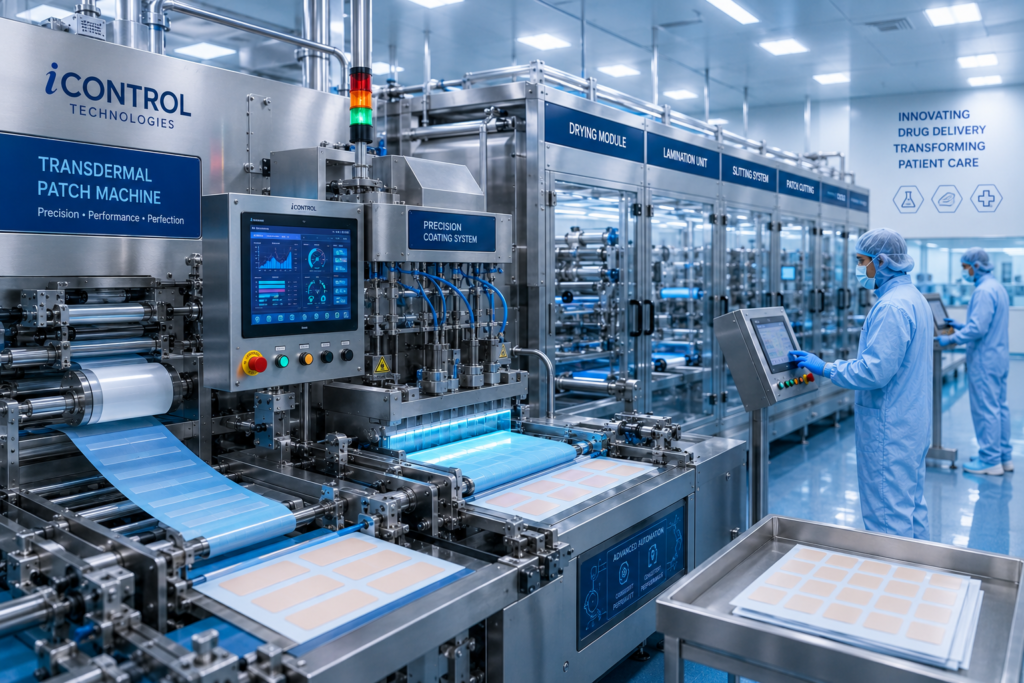
At the heart of this manufacturing process is the Transdermal Patch Machine—a specialized pharmaceutical production system engineered to create precise, consistent, and reliable transdermal patches. Modern transdermal patch manufacturing requires exceptional control over coating, drying, lamination, slitting, and cutting processes to ensure product quality and regulatory compliance.
For pharmaceutical companies seeking to expand their drug delivery capabilities, investing in advanced transdermal patch machinery represents a strategic step toward future-ready manufacturing.
Understanding Transdermal Patch Technology
Transdermal patches are medicated adhesive systems designed to deliver active pharmaceutical ingredients through the skin. Unlike traditional oral dosage forms, transdermal patches provide controlled and sustained drug release while bypassing the digestive system.
These patches are commonly used for:
- Pain management therapies
- Hormone replacement treatments
- Cardiovascular medications
- Smoking cessation products
- Neurological disorder treatments
- Motion sickness prevention
The growing popularity of transdermal delivery has increased demand for transdermal drug delivery systems that offer consistent therapeutic outcomes and improved patient compliance.
What is a Transdermal Patch Machine?
A Transdermal Patch Machine is an advanced pharmaceutical manufacturing system designed to produce medicated skin patches with precise dosage control and uniform quality. The machine integrates multiple production processes into a streamlined workflow that ensures consistent output and operational efficiency.
Modern systems typically include:
- Coating units
- Drying chambers
- Lamination stations
- Slitting systems
- Cutting modules
- Rewinding equipment
- Quality inspection systems
Together, these components create a highly efficient transdermal patch manufacturing process capable of meeting pharmaceutical industry standards.
Why Transdermal Patch Manufacturing Requires Precision
Unlike conventional pharmaceutical dosage forms, transdermal patches depend on highly accurate coating and formulation distribution. Even slight variations in thickness or ingredient concentration can impact therapeutic performance.
Advanced manufacturing systems address these challenges by providing:
- Uniform coating application
- Controlled drying conditions
- Accurate film thickness management
- Consistent adhesive distribution
- Precision cutting operations
These capabilities support pharmaceutical precision engineering and ensure reliable product performance.
Key Components of a Transdermal Patch Machine
1. Coating System
The coating stage is one of the most critical steps in transdermal patch production. The active formulation is evenly applied to a substrate using precision coating technology.
Advanced coating systems offer:
- Uniform thickness control
- Reduced material waste
- Continuous operation
- Consistent formulation distribution
These features contribute significantly to high-accuracy coating technology.
2. Drying Section
After coating, the film enters a controlled drying environment where solvents are removed while maintaining formulation integrity.
Modern drying systems provide:
- Multi-zone temperature control
- Uniform airflow distribution
- Optimized drying efficiency
- Consistent product quality
Proper drying is essential for maintaining pharmaceutical film manufacturing standards.
3. Lamination Unit
Lamination combines multiple layers to create the final patch structure. This process ensures product durability and controlled drug release performance.
High-quality lamination systems improve:
- Adhesion consistency
- Structural stability
- Product integrity
- Manufacturing efficiency
4. Slitting and Rewinding
Once laminated, the material is slit into desired widths and rewound for further processing.
Precision slitting equipment supports:
- Accurate dimensions
- Minimal edge defects
- High-speed operation
- Improved material utilization
This stage is vital for continuous pharmaceutical production workflows.
5. Patch Cutting System
The final production stage involves cutting individual patches to precise specifications.
Advanced cutting systems offer:
- High-speed production
- Uniform patch sizing
- Minimal material waste
- Automated operation
These capabilities enhance automated pharmaceutical manufacturing performance.
Benefits of Modern Transdermal Patch Machines
Superior Product Consistency
Automated production systems ensure every patch meets stringent quality standards, reducing variability between batches.
Increased Production Efficiency
Integrated workflows streamline manufacturing operations and reduce manual intervention.
Reduced Manufacturing Costs
Automation minimizes labor requirements and improves material utilization.
Improved Quality Control
Advanced monitoring systems enable real-time process control and inspection.
Scalability for Growing Demand
Manufacturers can easily expand production capacity as market demand increases.
These advantages make advanced pharmaceutical automation solutions essential for modern production facilities.
Applications of Transdermal Patch Manufacturing
Transdermal patch technology continues to expand across numerous therapeutic areas.
Common applications include:
Pain Management
Patches provide continuous medication delivery for chronic pain treatment.
Hormone Therapy
Controlled hormone release improves treatment consistency and patient comfort.
Smoking Cessation
Nicotine patches remain among the most widely recognized transdermal products.
Cardiovascular Care
Certain heart medications benefit from controlled transdermal administration.
Neurological Disorders
Transdermal delivery helps maintain stable drug concentrations over extended periods.
The versatility of these applications continues to drive demand for innovative pharmaceutical delivery systems.
Features to Look for in a Transdermal Patch Machine
Selecting the right machine requires careful evaluation of manufacturing requirements and future production goals.
Automation Integration
Advanced PLC and HMI systems improve operational control and monitoring.
Flexible Production Capability
Machines should support multiple formulations and patch configurations.
GMP-Compliant Design
Equipment must meet pharmaceutical hygiene and regulatory requirements.
Precision Process Control
Accurate management of coating, drying, and cutting parameters is essential.
Technical Support
Reliable service and maintenance support contribute to long-term operational success.
Manufacturers seeking long-term growth often prioritize GMP-compliant pharmaceutical machinery when evaluating equipment providers.
Emerging Trends in Transdermal Patch Manufacturing
The future of transdermal patch production is being shaped by technological advancements and changing healthcare needs.
Key trends include:
- Smart manufacturing systems
- AI-driven process monitoring
- Enhanced automation platforms
- Personalized drug delivery solutions
- Sustainable manufacturing practices
These developments are transforming the industry and creating new opportunities for next-generation pharmaceutical manufacturing.
Why Pharmaceutical Manufacturers Are Investing in Advanced Transdermal Technology
As healthcare providers increasingly seek patient-friendly treatment options, transdermal delivery systems continue to gain popularity. Their ability to provide controlled medication release while improving convenience makes them an attractive alternative to conventional dosage forms.
Manufacturers investing in advanced transdermal patch machinery can benefit from:
- Expanded product portfolios
- Greater market competitiveness
- Improved production efficiency
- Enhanced product quality
- Long-term operational scalability
This makes transdermal patch manufacturing one of the most promising segments within modern pharmaceutical production.
Conclusion
Transdermal patches have transformed the way medications are delivered, offering a convenient, effective, and patient-centric alternative to traditional dosage forms. As demand for these products continues to grow, pharmaceutical manufacturers require advanced machinery capable of delivering precision, consistency, and scalability.
Modern Transdermal Patch Machines integrate sophisticated coating, drying, lamination, slitting, and cutting technologies into a streamlined manufacturing process that supports high-quality production and regulatory compliance.
By investing in state-of-the-art transdermal patch manufacturing systems, pharmaceutical companies can improve operational efficiency, maintain superior product quality, and position themselves for success in an increasingly competitive healthcare market.