
The pharmaceutical industry is rapidly shifting toward patient-friendly and controlled drug delivery systems, and transdermal patches have emerged as one of the most effective solutions. At the heart of this innovation lies the Transdermal Patch Making Machine—a highly specialized manufacturing system designed to produce consistent, safe, and high-quality medicated patches.
At iControl Technologies, we specialize in advanced automation and precision engineering solutions for pharmaceutical manufacturing. This article explains what a transdermal patch making machine is, how it works, its core components, quality considerations, and why it is a critical investment for modern pharma production facilities.
What Is a Transdermal Patch Making Machine?
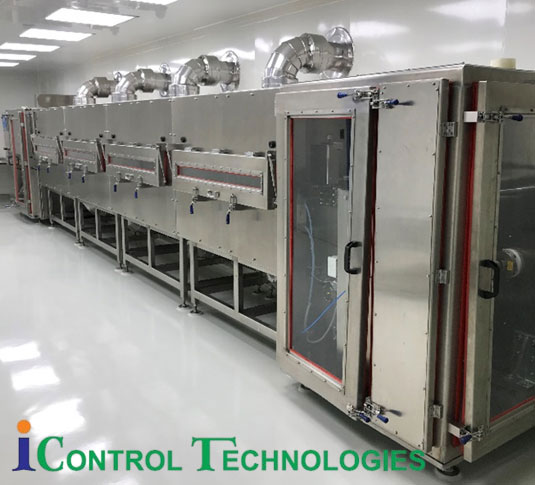
A Transdermal Patch Making Machine is an integrated pharmaceutical manufacturing system used to produce medicated patches that deliver active pharmaceutical ingredients (APIs) through the skin into the bloodstream. These machines are designed to handle complex processes such as coating, drying, laminating, cutting, inspection, and packaging—while maintaining strict regulatory compliance.
Unlike conventional dosage forms, transdermal patches require extreme precision, as even minor deviations in coating thickness or adhesive performance can affect drug efficacy and patient safety.
Importance of Transdermal Patch Technology
Transdermal drug delivery offers several advantages over oral and injectable methods:
- Controlled and sustained drug release
- Bypasses first-pass metabolism
- Improved patient compliance
- Reduced gastrointestinal side effects
- Stable plasma drug concentration
As demand for these benefits grows, pharmaceutical manufacturers require reliable and scalable transdermal patch making machines to meet market needs.
Key Components of a Transdermal Patch Making Machine
At iControl Technologies, our systems are designed as modular and customizable platforms. A typical transdermal patch making machine includes the following core sections:
1. Coating Unit
The coating unit applies the drug-adhesive formulation onto a substrate or release liner with high precision.
Common coating technologies include:
- Slot-die coating
- Gravure coating
- Knife-over-roll coating
Critical parameters controlled:
- Coating thickness
- Flow rate
- Web speed
- Temperature
Uniform coating ensures consistent drug dosage in every patch.
2. Drying and Curing System
After coating, solvents must be evaporated without degrading the API or adhesive.
Features include:
- Multi-zone temperature control
- Controlled airflow
- Solvent recovery systems
Proper drying prevents tack loss, crystallization, and instability in the drug matrix.
3. Lamination Module
The lamination process bonds multiple layers together, such as:
- Drug matrix layer
- Backing film
- Protective release liner
This stage ensures structural integrity, flexibility, and controlled drug release during application.
4. Cutting and Die-Punching System
The laminated web is cut into individual patches of precise shapes and sizes.
Cutting options include:
- Rotary die cutting
- Flatbed die cutting
- Custom shape cutting
Accuracy at this stage is essential for dose uniformity and aesthetic consistency.
5. In-Line Inspection System
Modern transdermal patch making machines integrate automated inspection systems to detect:
- Coating defects
- Air bubbles
- Foreign particles
- Dimensional variations
Defective patches are automatically rejected, ensuring only compliant products proceed further.
6. Packaging and Serialization (Optional)
Finished patches can be packed into:
- Sachets
- Blister packs
- Unit-dose pouches
Serialization, batch coding, and traceability features support regulatory compliance and supply chain security.
Manufacturing Process Overview
A typical transdermal patch production workflow includes:
- Raw material preparation and formulation
- Precision coating of drug matrix
- Controlled drying and curing
- Lamination with backing and liner
- Cutting and shape formation
- In-line quality inspection
- Packaging and labeling
Each step is monitored and controlled through automated systems to ensure repeatability and compliance.
Quality Control in Transdermal Patch Making Machines
Quality is a non-negotiable aspect of transdermal patch production. At iControl Technologies, machines are designed to support robust quality control at every stage.
Critical Quality Attributes (CQAs):
- Coating uniformity
- Patch thickness consistency
- Adhesive peel strength
- Drug content uniformity
- Absence of contaminants
Quality Control Tools Include:
- Machine vision systems
- Laser thickness measurement
- Weight monitoring
- Data logging and SPC analysis
These controls minimize batch rejection and ensure patient safety.
Regulatory Compliance and Standards
A transdermal patch making machine must comply with global pharmaceutical regulations, including:
- cGMP (Current Good Manufacturing Practices)
- 21 CFR Part 11 (Electronic records & signatures)
- ISO standards for quality and cleanroom compatibility
- Pharmacopoeial guidelines (USP, EP, IP)
iControl Technologies designs machines with:
- Audit trails
- User access control
- Electronic batch records
- Validation documentation (IQ/OQ/PQ)
Advantages of Using Advanced Transdermal Patch Making Machines
Investing in a modern system offers significant operational benefits:
- High production efficiency
- Reduced material wastage
- Consistent product quality
- Faster changeover between products
- Scalability for future growth
- Lower operational risk
Automation also reduces human intervention, minimizing contamination risks.
Challenges in Transdermal Patch Manufacturing
Despite its benefits, transdermal patch production presents challenges such as:
- Maintaining uniform coating at high speeds
- Handling sensitive or high-viscosity formulations
- Controlling environmental factors like humidity
- Meeting stringent regulatory expectations
Advanced machine design and process control are essential to overcome these challenges.
Innovation Trends in Transdermal Patch Making Machines
The future of transdermal patch manufacturing is driven by technology advancements such as:
- IoT-enabled machines for real-time monitoring
- Predictive maintenance to reduce downtime
- AI-based inspection systems
- Modular and flexible manufacturing platforms
- Continuous manufacturing models
iControl Technologies continuously invests in these innovations to deliver next-generation solutions.
Choosing the Right Transdermal Patch Making Machine
When selecting a machine, pharmaceutical manufacturers should evaluate:
- Production capacity and scalability
- Precision and process control capabilities
- Regulatory compliance support
- Ease of maintenance and cleaning
- After-sales service and technical support
A well-chosen system not only improves product quality but also strengthens long-term operational efficiency.
Conclusion
The Transdermal Patch Making Machine is a cornerstone of modern drug delivery manufacturing. It combines precision engineering, advanced automation, and stringent quality control to produce safe and effective transdermal patches at scale.
At iControl Technologies, we understand the complexity of transdermal systems and deliver reliable, compliant, and future-ready solutions tailored to pharmaceutical manufacturers’ needs. With the right technology partner, companies can confidently meet regulatory demands, improve efficiency, and deliver superior patient outcomes.